An Invitation to the Mystical World of Art
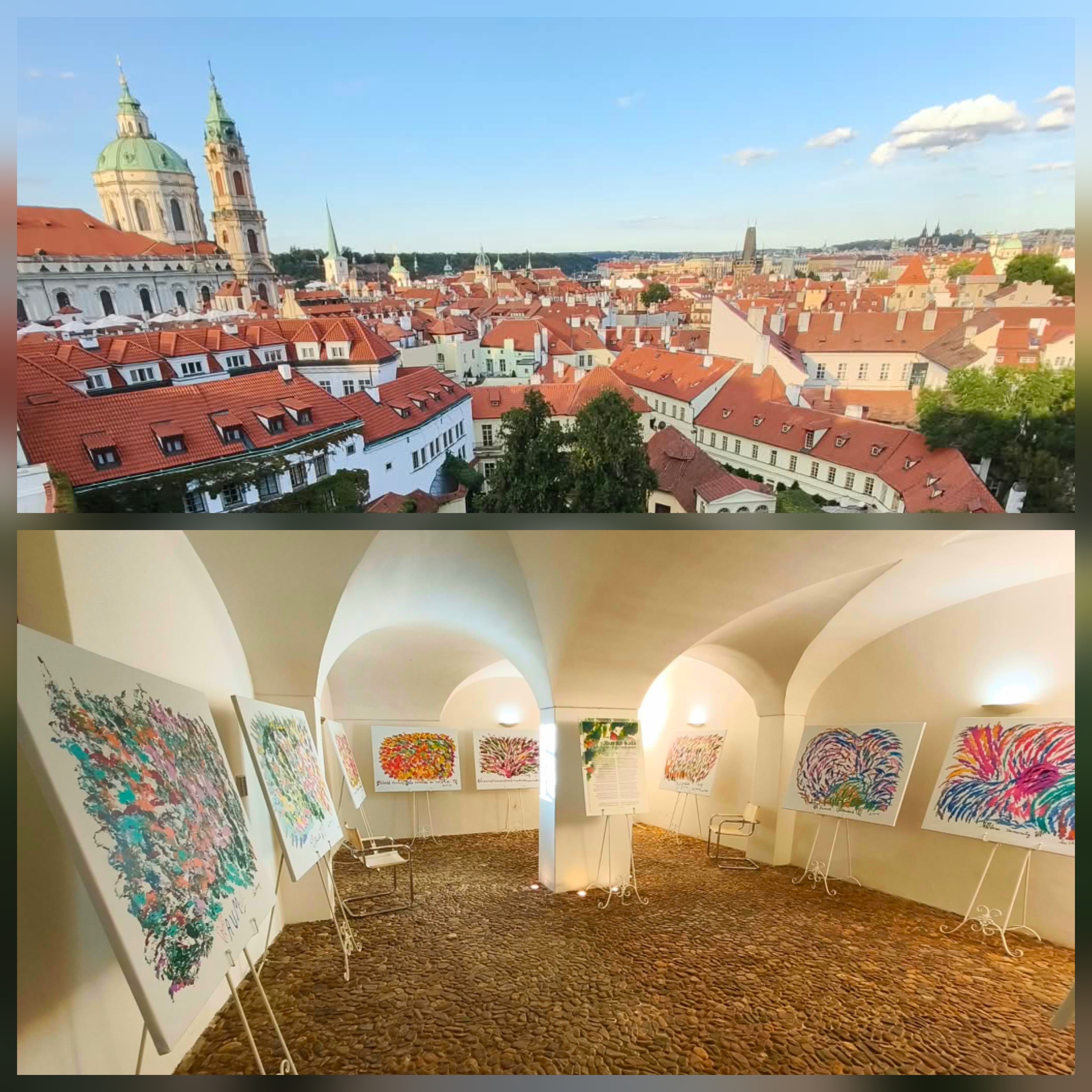
The exhibition of original drawings and paintings by Sri Chinmoy, entitled Jharna Kala: Fountain-Art, brings a unique combination of visual art and deep meditative stillness to the Baroque setting of Prague’s Vrtba Garden. Running throughout September 2026, the exhibition is divided between the freely accessible Gothic Halls and the Garden Gallery, where visitors can see the artist’s bird drawings, symbolising the freedom of the human soul.
Light Transformed into Colour
When Henry Geldzahler, then a curator at the Metropolitan Museum of Art in New York, saw the drawings of spiritual teacher Sri Chinmoy in 1976, he compared the encounter to learning a new language. The visual art of this Indian thinker lies outside the conventional history of art. He named his work Jharna Kala, which means “Fountain-Art” in Bengali.
The name perfectly expresses the essence of his work: creativity flowing freely and dynamically, without the intervention of the analytical mind, like an endless stream from a deep inner source.
Painting Without the Mind: The Philosophy of Inner Silence
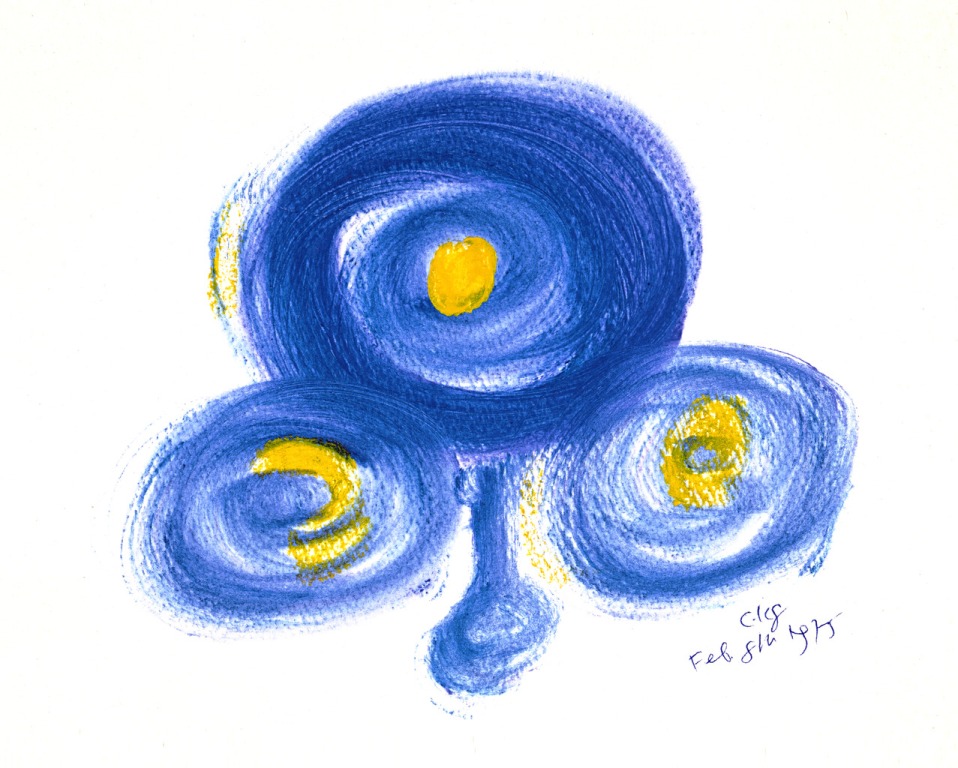
Traditional artists may spend a long time planning, sketching and intellectually analysing their compositions. Sri Chinmoy chose a radically different approach. He painted in a deep state of meditation, in which the rational mind receded entirely into the background. He explained that he did not use the mind, but sought to surrender with devotion to the Supreme and serve as His perfect instrument, allowing the Supreme to paint through him according to his receptivity.
For this reason, his style is associated with lyrical abstraction and has affinities with American action painting and intuitive art. His paintings do not seek to depict external reality. Rather, they convey inner vibrations, peace, joy and light directly onto the canvas. The artist frequently emphasised that art is not something we must understand intellectually, but something we must feel.
He advised viewers not to try to grasp the spiritual meaning of his paintings with the mind. To feel their reality, he said, they must use the heart and become one with the consciousness of the canvas. If a painting awakens an inner stirring, harmony or the desire to become a better person, it has fulfilled its spiritual purpose.
Technical Originality: Speed, Sponges and Simplicity
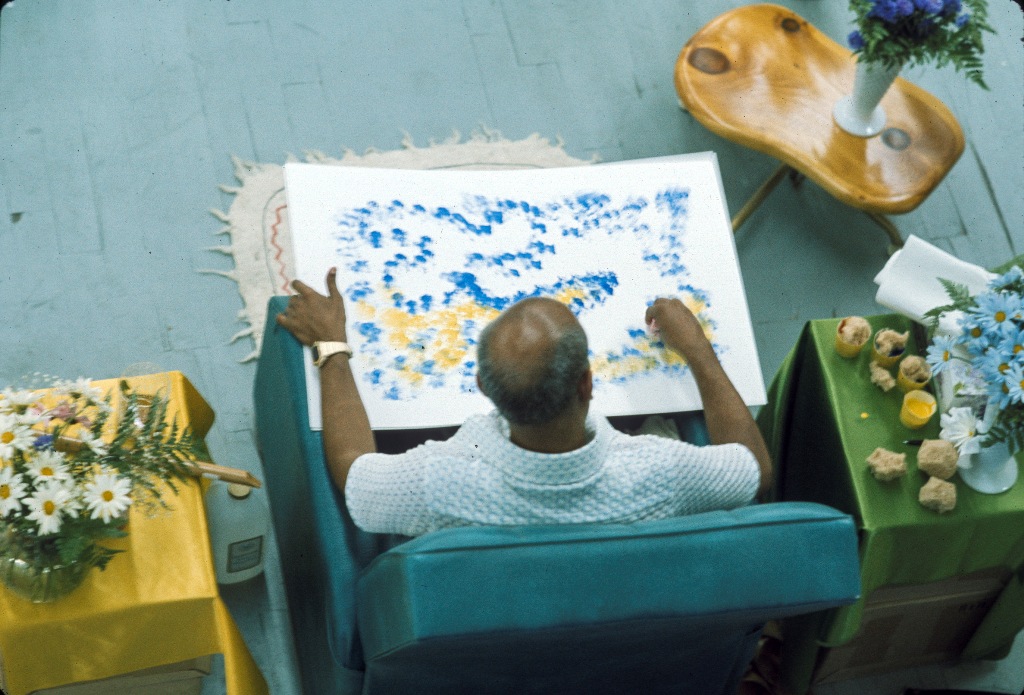
The technique of Jharna Kala is founded on immediacy and dynamism. To capture the fleeting moment of meditation before rational thought could enter the process, Sri Chinmoy needed to paint extremely quickly. He adapted his entire technique to this purpose.
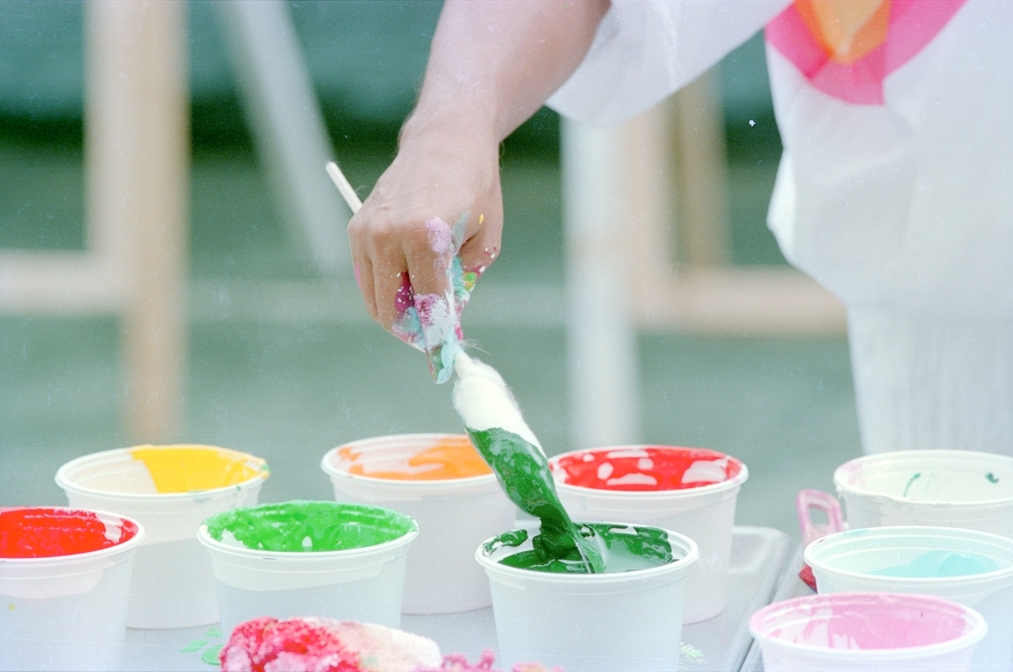
Unconventional tools: Alongside traditional brushes, he used specially cut foam sponges, cotton swabs and sometimes even his fingertips. Applying thick acrylic paint with a nearly dry sponge produced granular, vibrating surfaces through which the underlying support subtly showed. He used pure, highly saturated acrylic colours, placing them directly beside one another on the painting surface rather than mixing them on a palette. Viewed from a distance, the eye itself blends the radiant shades of blue, purple, magenta and yellow.
In response to critics who questioned his emphasis on quantity rather than quality and perfectionism, Sri Chinmoy explained that earthly perfection is a relative experience of the mind. For him, perfection meant continuous progress and transcending his previous reality. Each of his thousands of paintings was a flame of aspiration capable of illuminating the darkness of ignorance. On 16 November 1975, he created 16,031 original works in a single day.
Soul-Birds: Calligraphic Messengers of Freedom
While the acrylic paintings of Jharna Kala are explosions of colour and elemental expression, another major part of Sri Chinmoy’s work celebrates pure minimalism and the economy of line. From 1991 until the end of his life, he drew more than fifteen million small pictures of birds, which he called Soul-Birds.
He described his birds as speaking of the love of immortality and its perfection, while also addressing a suffering world with a message of hope and liberation.
Made with felt-tip pens, ink or calligraphic pens, the drawings resemble the tradition of Zen calligraphy. Many are formed in a single, uninterrupted, flowing movement of the hand. The anatomy of the bird is reduced to an absolute minimum: the line of a wing, a beak and sometimes an eye. Technically remarkable is the confidence of the hand: the line does not hesitate or correct itself; it simply flows.
Recognition in the Art World and Historic Exhibitions
Sri Chinmoy’s work soon attracted attention in the professional art world. In October 1975, the School of Visual Arts (SVA) in Manhattan hosted a three-day exhibition of his works. Brian Gormley, then Dean of Students, was deeply moved by Sri Chinmoy’s lecture and wrote that true art and spirituality are one. In June 1976, the school presented Sri Chinmoy with a special award for his contribution to art.
Over the following decades, his art was exhibited in many countries. At United Nations Headquarters in New York, his work was first displayed in the Secretariat lobby in October 1975 under the auspices of UNICEF. In May 1977, he formally presented the United Nations with his large painting United Nations: the Heart-Home of the World-Body.
Other exhibitions included UNESCO headquarters in Paris, at L’Espace Miró in November 1992; the Carrousel du Louvre in Paris, where approximately 600 of his paintings were displayed on two occasions; and Grand Central Station in New York, where a monumental exhibition filled Vanderbilt Hall in September 1977. The exhibition was visited and appreciated by the then Mayor of New York, Abraham Beame.
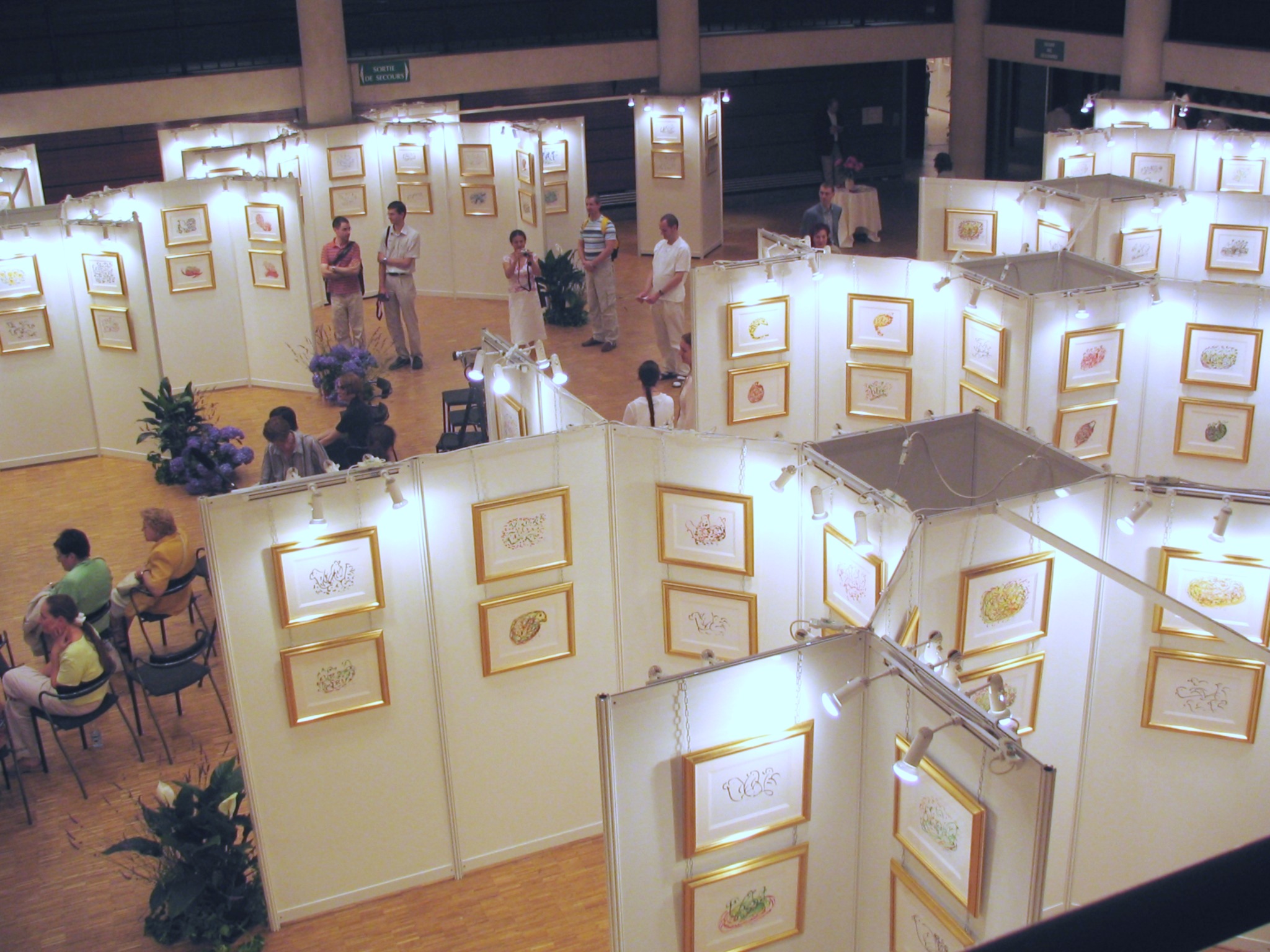
July 2006: An exhibition of Sri Chinmoy’s artwork at the Carrousel du Louvre in Paris.
Sri Chinmoy’s artistic legacy speaks directly to the heart, without asking anyone to study complex art-historical manifestos. It is an art of immediate inner experience. Through its joyful colours and lightness of line, it offers the human mind a visual oasis of peace, silence and spontaneous inspiration in today’s fast-moving world. Like Sri Chinmoy’s concerts and meditation classes, exhibitions of his art are offered to the public free of charge.
Additional Moments in the History of Jharna Kala
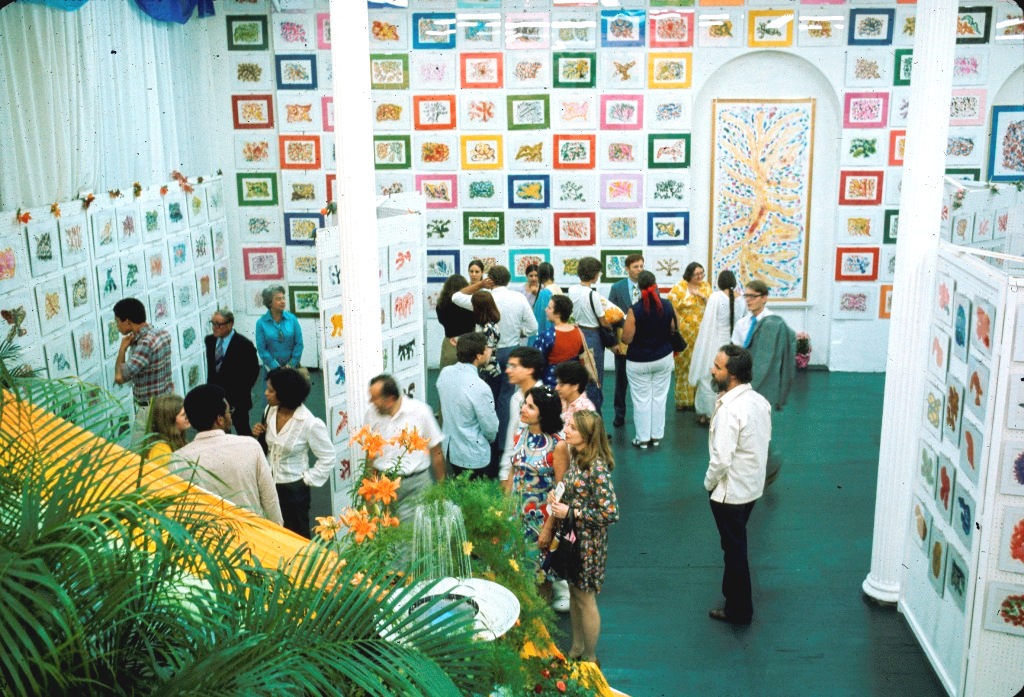
28 April 1975: The Jharna Kala Gallery concluded its month-long exhibition with a special farewell. For the occasion, Sri Chinmoy painted what was then his largest canvas, measuring 2.7 × 4.8 metres, entitled Supreme, I Bow to Thee! He completed it in one hour. Artist Peter Max was among the guests.
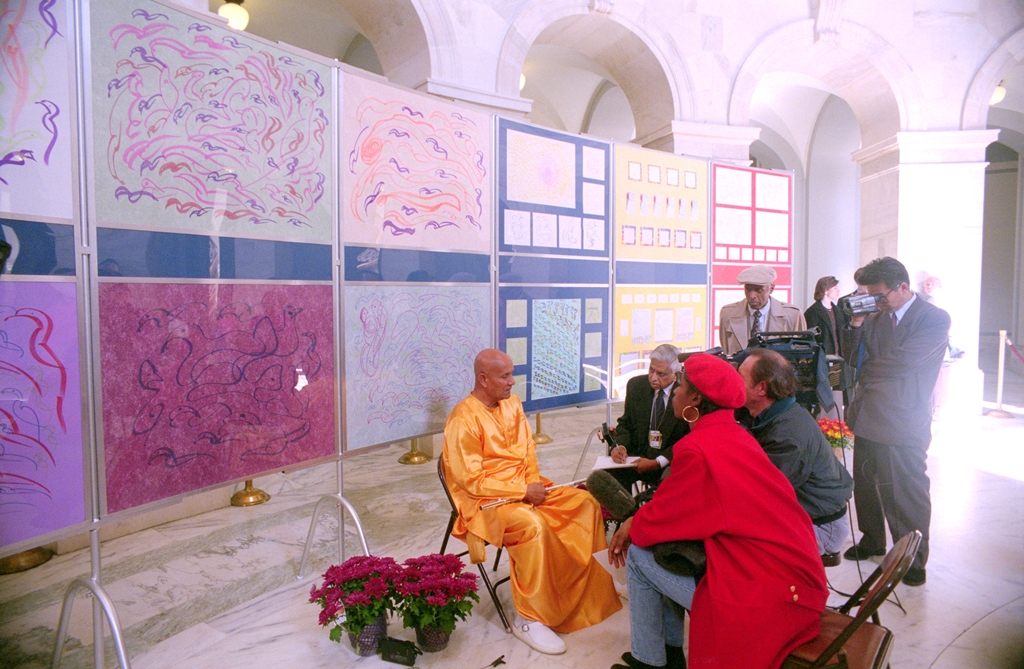
17 November 1995: On the morning of his Peace Concert in Washington, D.C., Sri Chinmoy gave a short flute performance and an interview in the rotunda of the Russell Senate Office Building, where his drawings were on display. Senators Claiborne Pell of Rhode Island and Daniel Patrick Moynihan of New York sponsored the week-long exhibition.
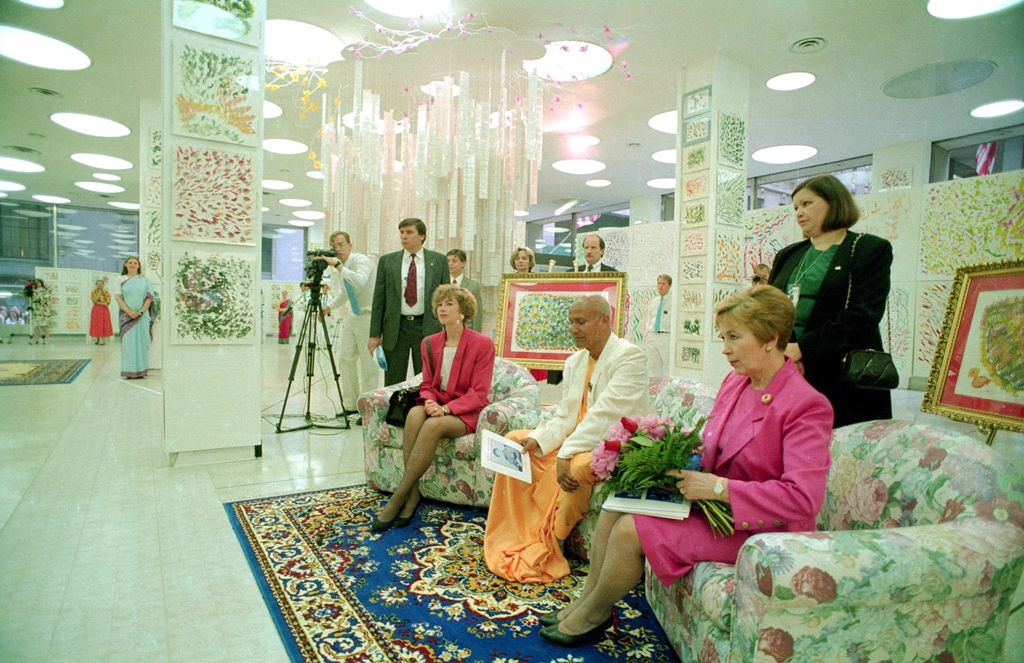
12 May 1992: Following one of their meetings with President Gorbachev, Raisa Gorbacheva and her daughter Irina visited an exhibition of Sri Chinmoy’s paintings at the Jharna Kala Gallery at 52 Vanderbilt Avenue in Manhattan. Sri Chinmoy dedicated the exhibition to Russia’s First Lady and offered her a work for her private collection.
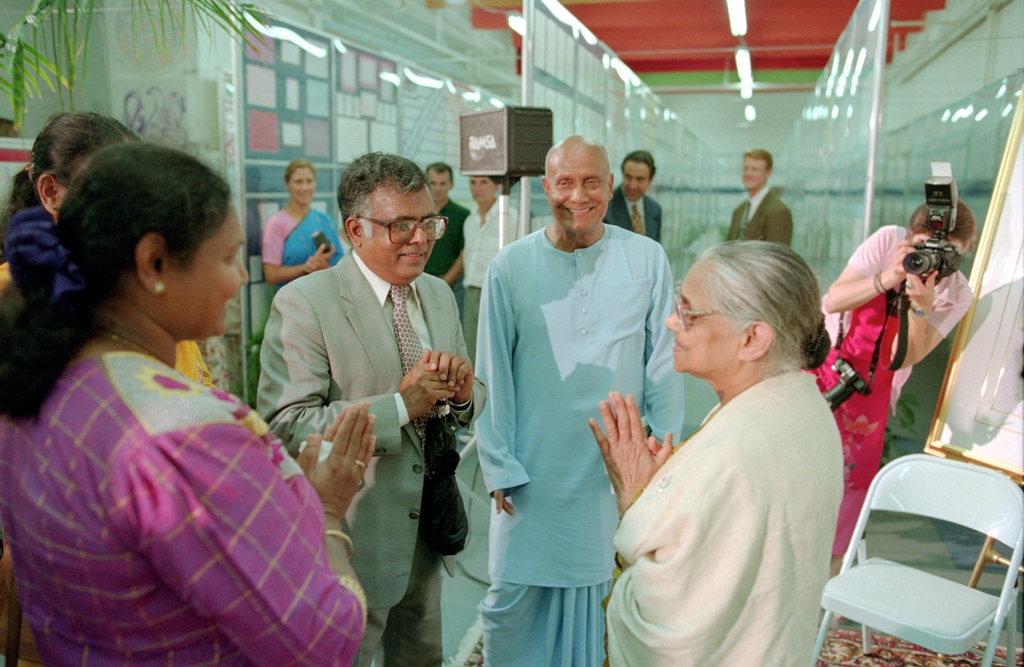
6 September 1996: At a public event at the Jharna Kala Gallery near the United Nations, Sita Gandhi recalled her grandfather Mahatma Gandhi and her childhood in a South African ashram. The gallery also hosted receptions and concerts for members of the United Nations community and displayed millions of Peace-Bird drawings.
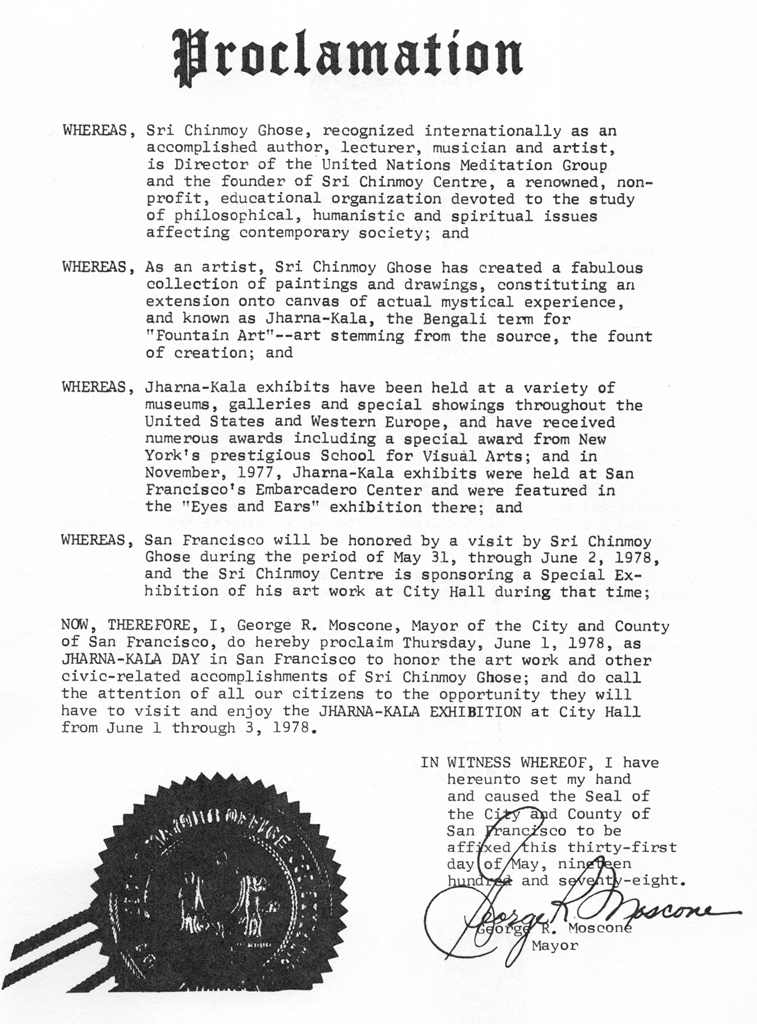
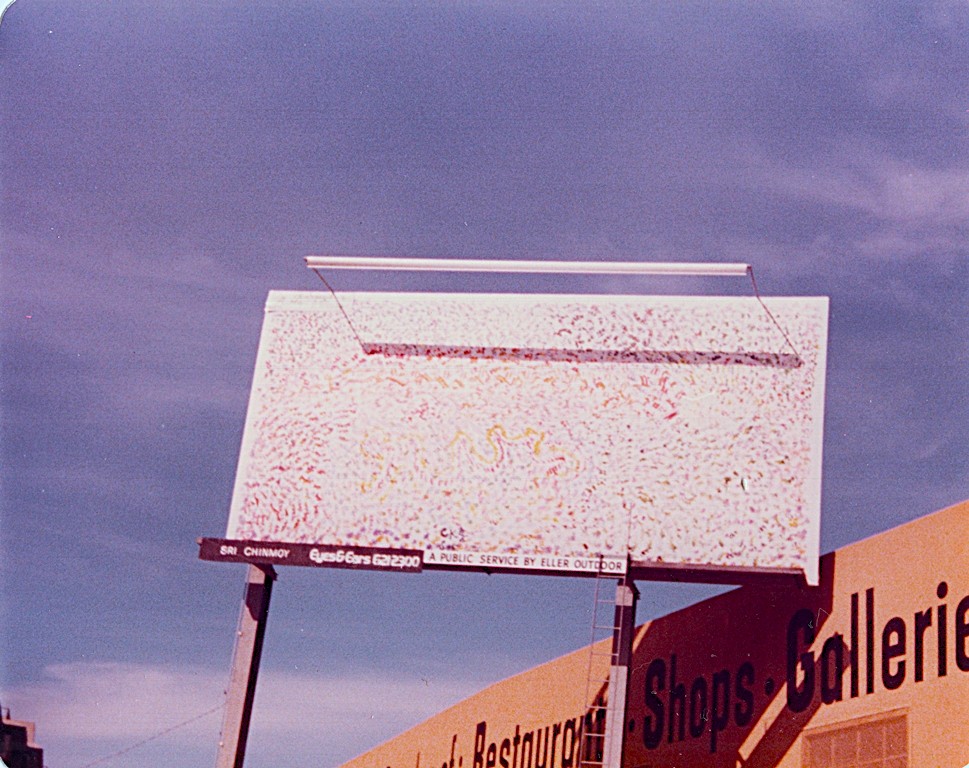
1 June 1978: At an exhibition of Jharna Kala in San Francisco, Mayor George Moscone proclaimed the day Fountain-Art Day.
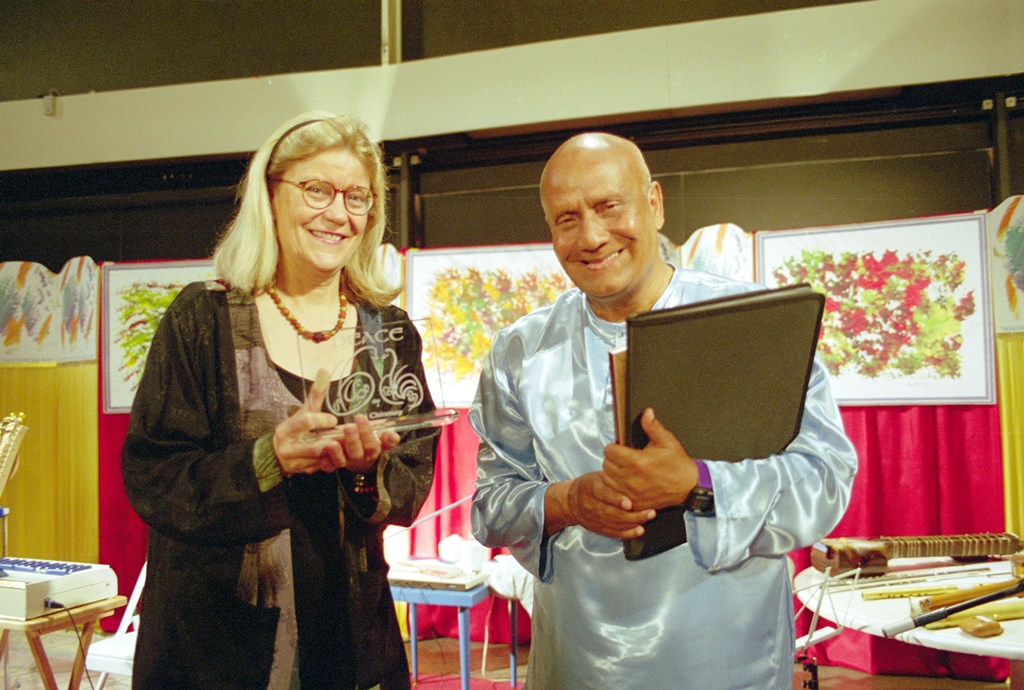
10 September 2000: Sri Chinmoy gave a Peace Concert and received an honorary recognition from the Pluralism Project at Harvard University. Its director, Professor Diana L. Eck, recognised his contributions to bringing nations and cultures together in the service of peace, through music, art, sport and civic leadership.
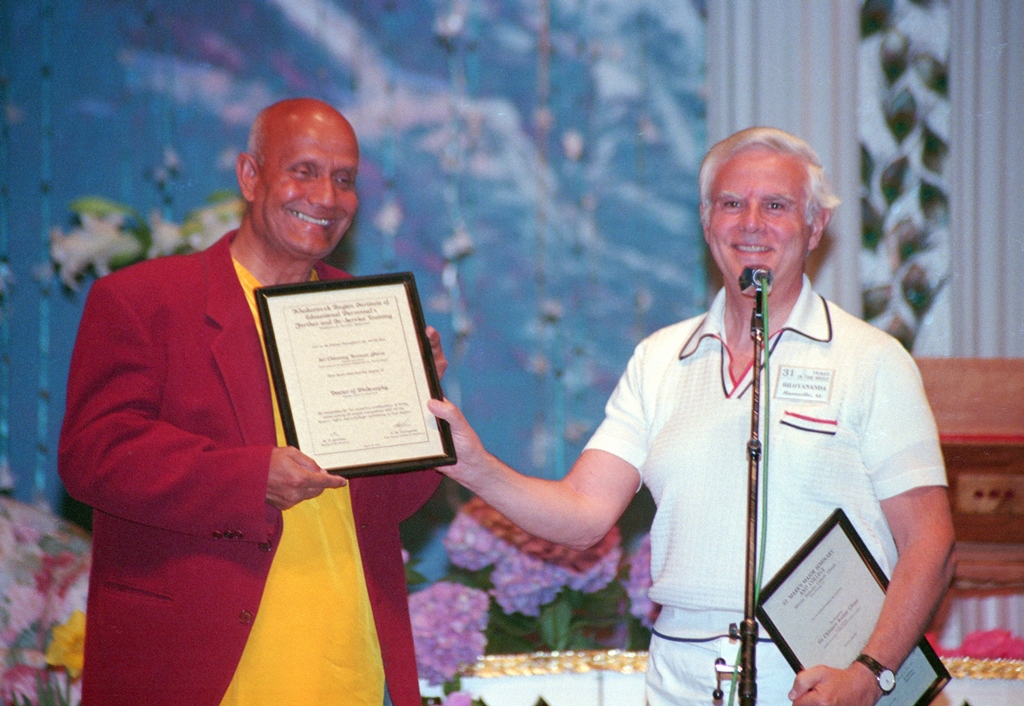
13 April 1995: Sri Chinmoy received an honorary doctorate in religious studies from St. Mark’s Major Seminary and College in Minnesota, recognising his spiritual contribution to bringing God’s peace into human hearts.